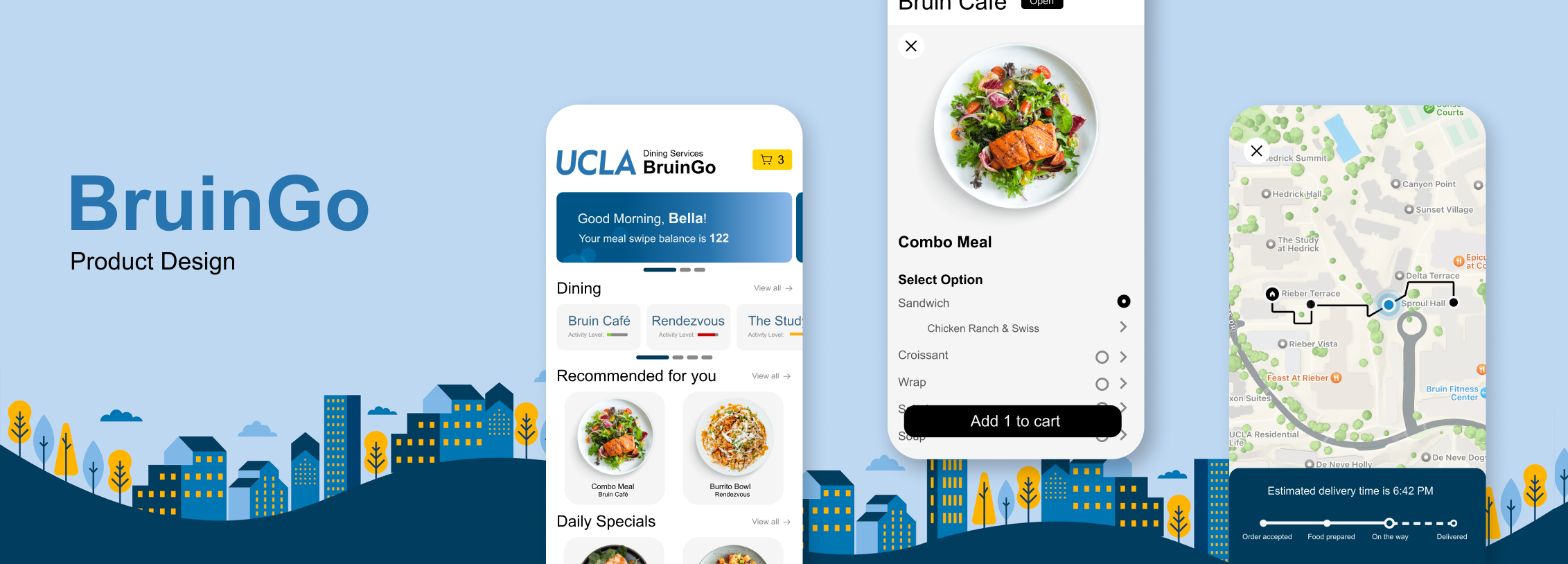
Research • Design • Wireframes • Prototype
My alma mater UCLA provided me with an enriching education, great life-long friends, a plethora of unique memories, and not to mention exceptional dining hall food. Admittedly, however, one aspect I do recall being a pain more often than not was the perpetually long lines to get food.
BruinGo is a product that I conceptualized in my undergraduate years at UCLA and designed to be a food delivery service affiliated with UCLA dining halls and quick-service restaurants. BruinGo is a mock mobile app that offers a solution to the congested dining halls and long wait times for meals. It intends to be a convenient, quick, and cost-effective means of obtaining meals as a UCLA student with features that allow students to more effectively manage their time.
It's no lie that college students order take-out frequently. During my undergraduate years at UCLA, I too found myself in the position of getting food delivered so I didn't have to wait in long lines at dining halls. Because UCLA's population is so large, the dining halls were always packed to the brim and the whole process of just getting dinner could even last 3 hours.
Often, I found myself thinking “if only you could get dining hall food delivered”. It would not only be convenient and save time, but also be financially efficient. I conceptualized a mobile app similar to food delivery apps already on the market but specifically affiliated with UCLA dining and this idea stuck with me throughout my entire time at UCLA and sparked the inspiration for this product design.
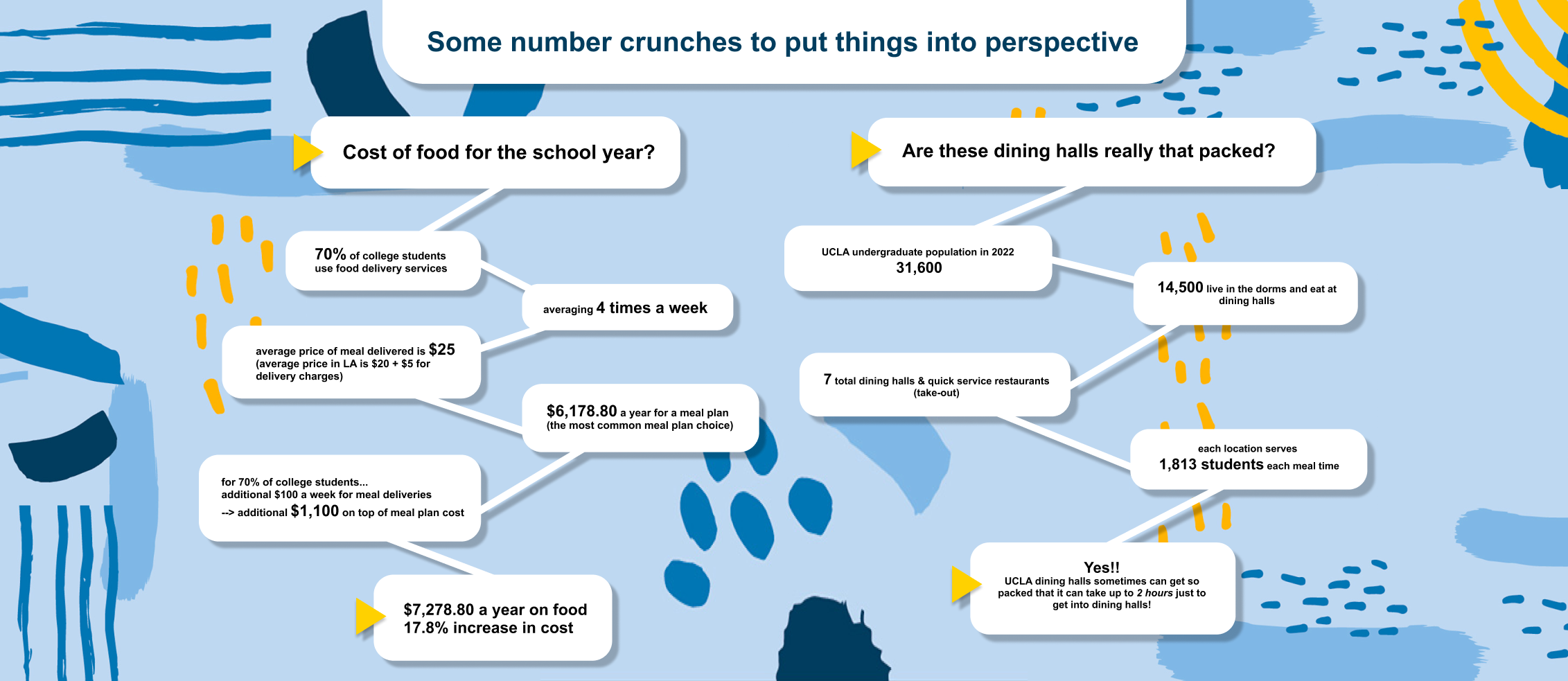
At UCLA, meal plans are automatically included in housing contracts, meaning all students living in the dorms have to purchase a meal plan. The cost of food for one academic school year increases by 17.8% when you factor in the additional cost of food delivery. Because over 82% of students are interested in getting delivery from their dining services, it signifies that the main reason students get food delivered is because of time and convenience. BruinGo would fill this need for food delivery while also utilizing the students' meal plans. This would be the most economical option for students since no additional expenditure would be needed.
Food delivery is a very convenient and time-efficient way for college students to obtain meals. It cuts out long waits and dining hall congestion, allowing students to utilize the time they would have spent going to dining halls more productively. Despite immeasurable, this convenience is profound and is exactly what busy college students yearn for.
*cost was taken from UCLA Dining Services' website and based on the most common meal plan choice
**statistic was based on DoorDash survey conducted by Wakefield Research
***based on data taken from Datassential
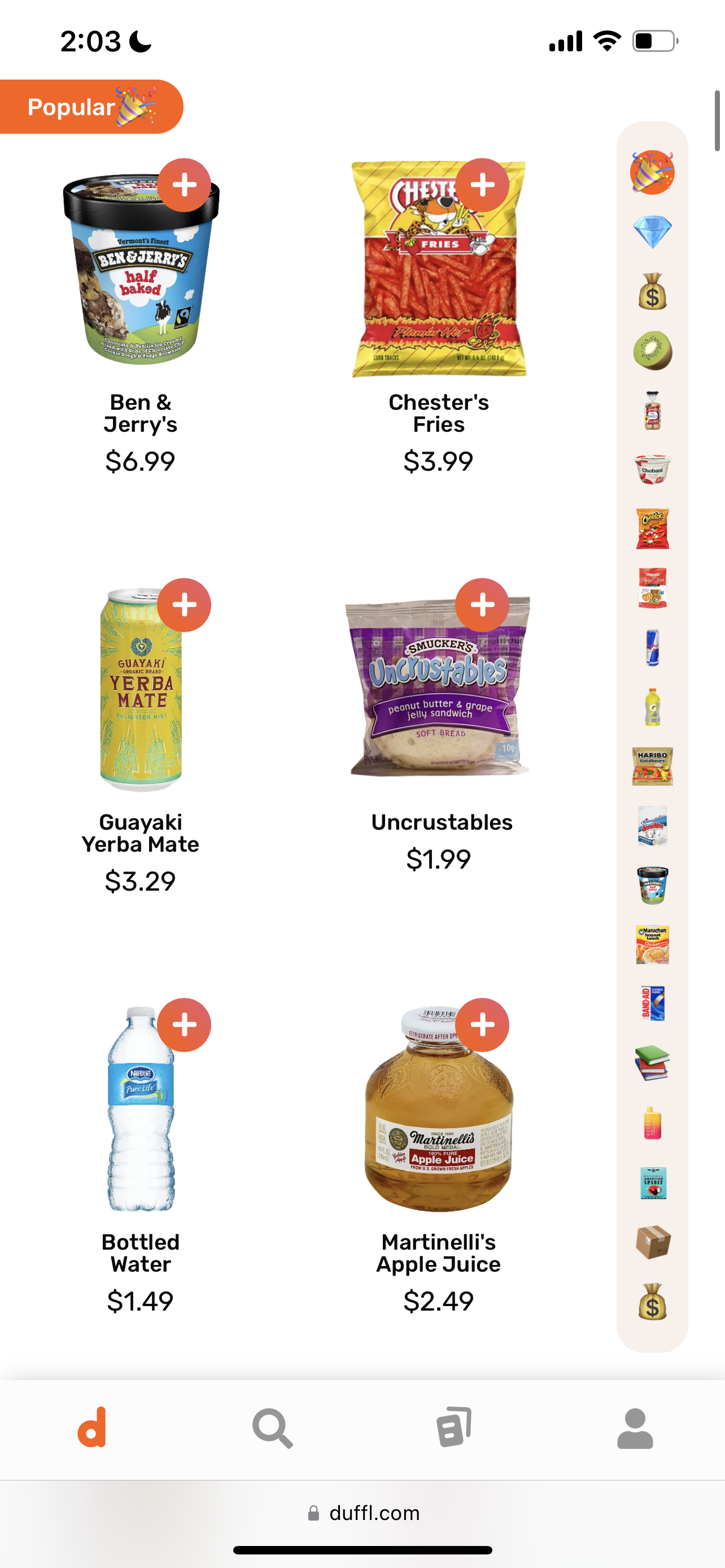
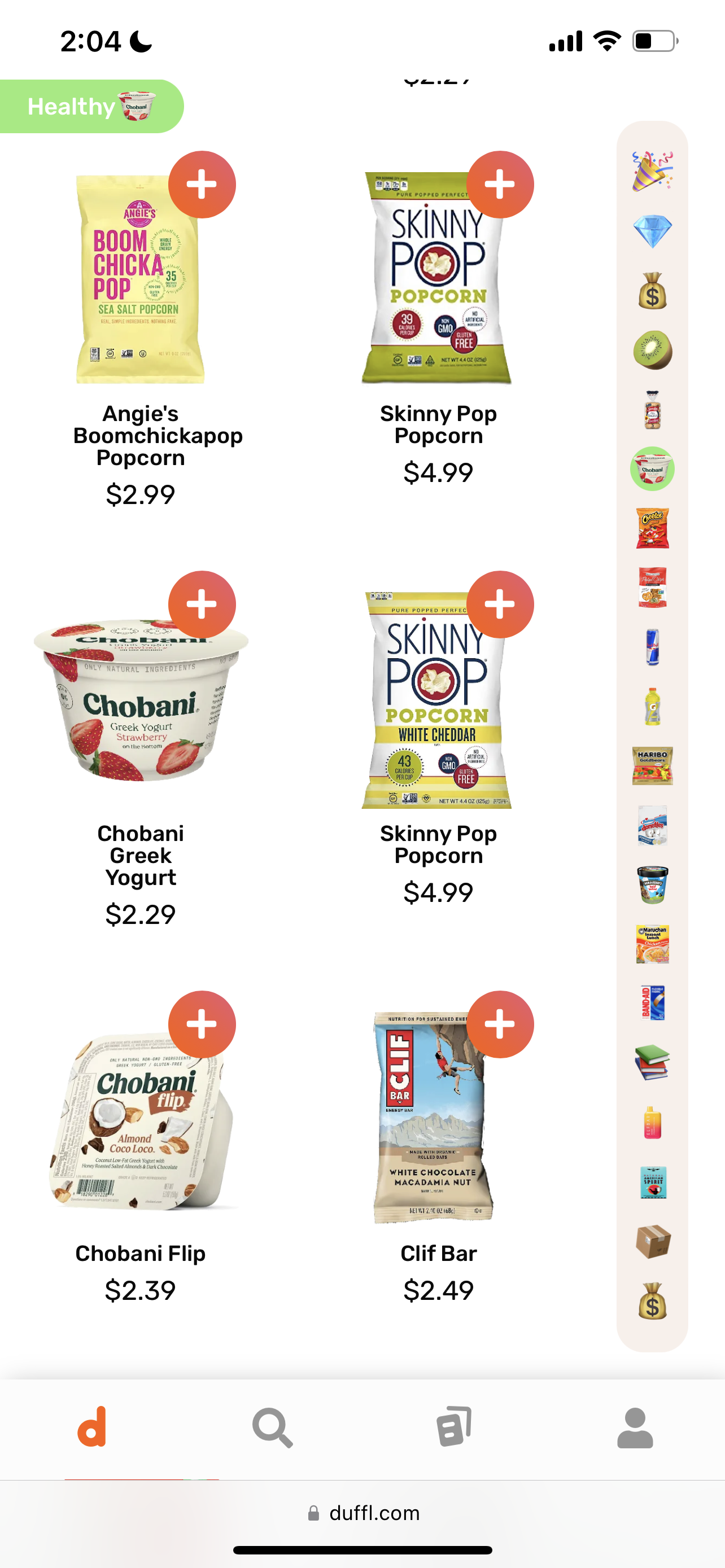
Duffl is a 10-minute consumer goods delivery service for college students. The main distinguishing aspect of BruinGo from Duffl is the goods it is offering. Duffl’s inventory mainly consists of single bags of chips, pints of ice cream, bags of candy, etc., all small convenience store type items. BruinGo would be supplying consumers fresh whole meals, something that Duffl is not able to do.
Other food delivery services such as UberEats, Postmates, GrubHub, DoorDash, etc. do not provide the same services as BruinGo. BruinGo is able to do what these companies cannot: deliver UCLA dining meals and utilize meal swipes as its currency. It is the financially optimal alternative for students because it reduces expenses and provides a high return on investment in regards to these prepaid meal plans.
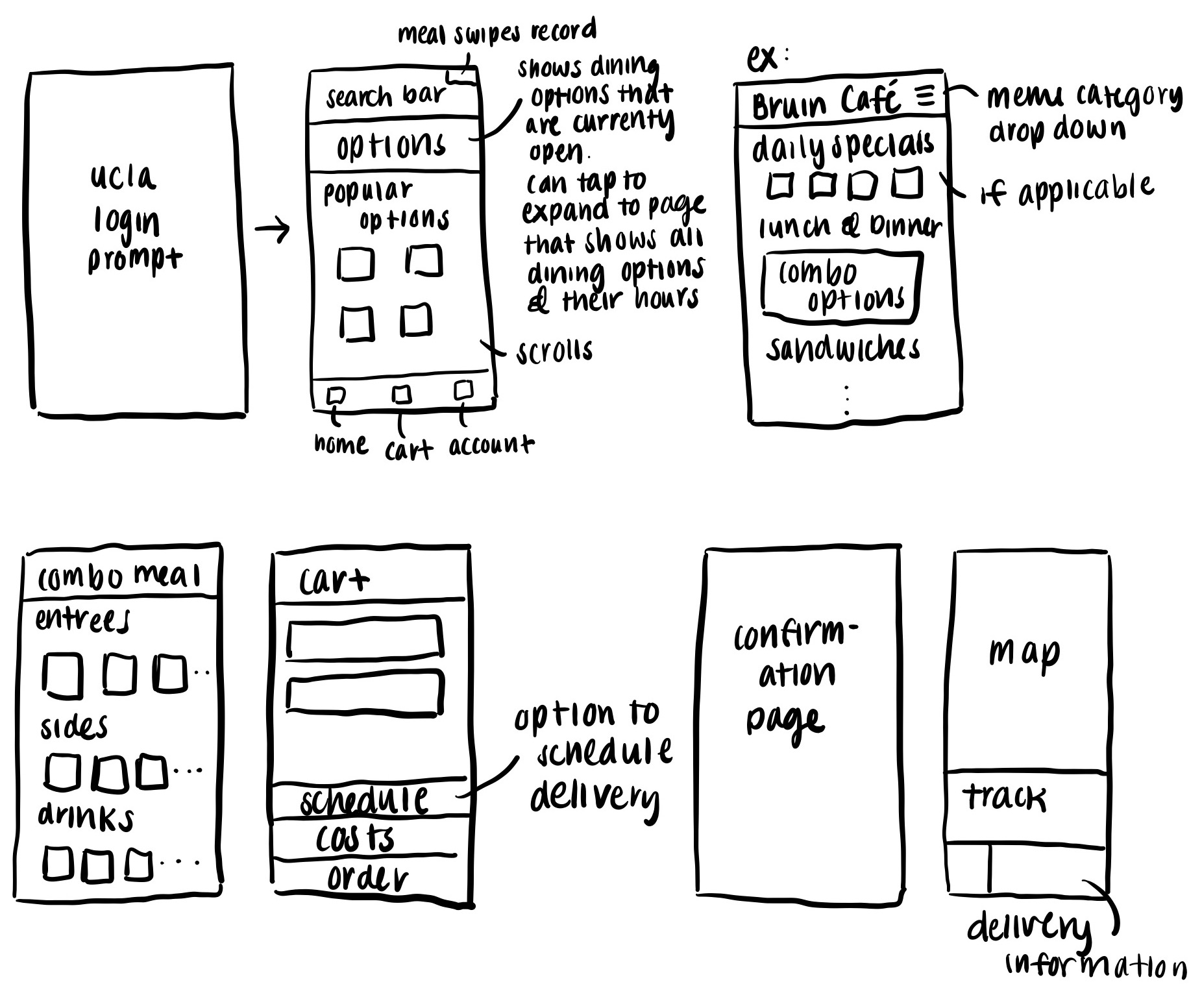
The initial blueprint was modeled after popular mobile app delivery services with notable pages including cart, ordering, delivery time, etc. This wireframe illustrates the main features I want demonstrated in the app.
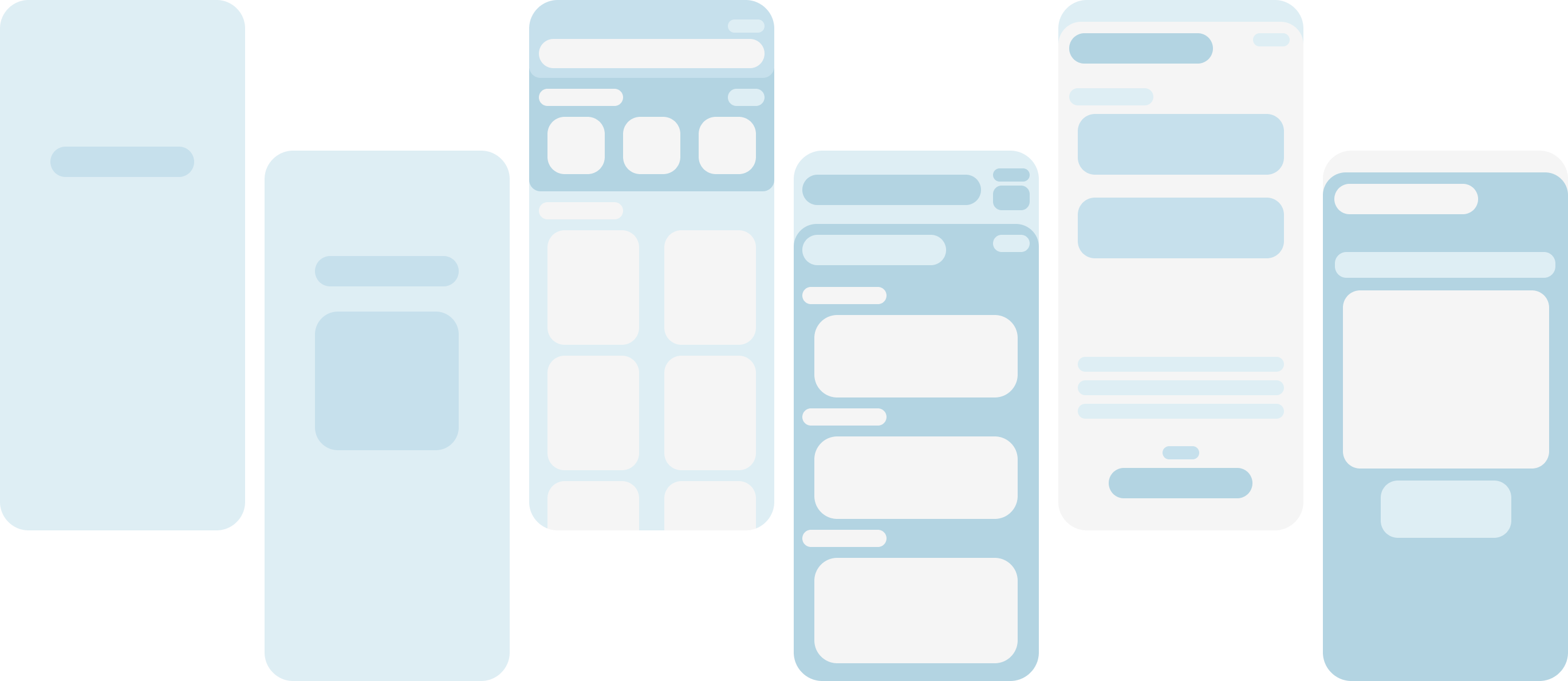
From the wireframe, I then converted the design into mobile screen layout. Text and colors were omitted in order to focus on the layout itself. This low-fidelity mockup became the basis for my prototype.
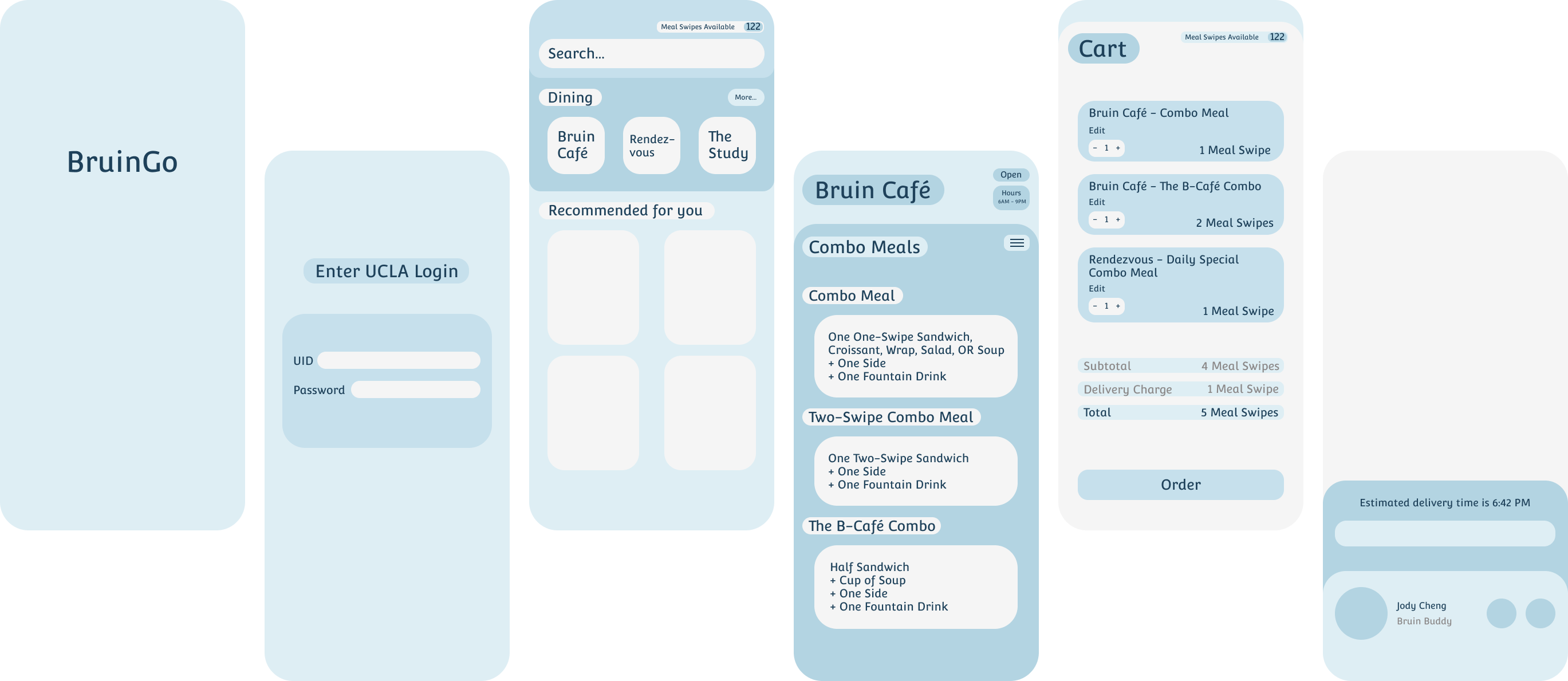
Text was then added to their respective allocated spaces to create this medium-fidelity mockup. Once I got a general idea of what I wanted the app to look like, the last step was the flesh out the design with detail.
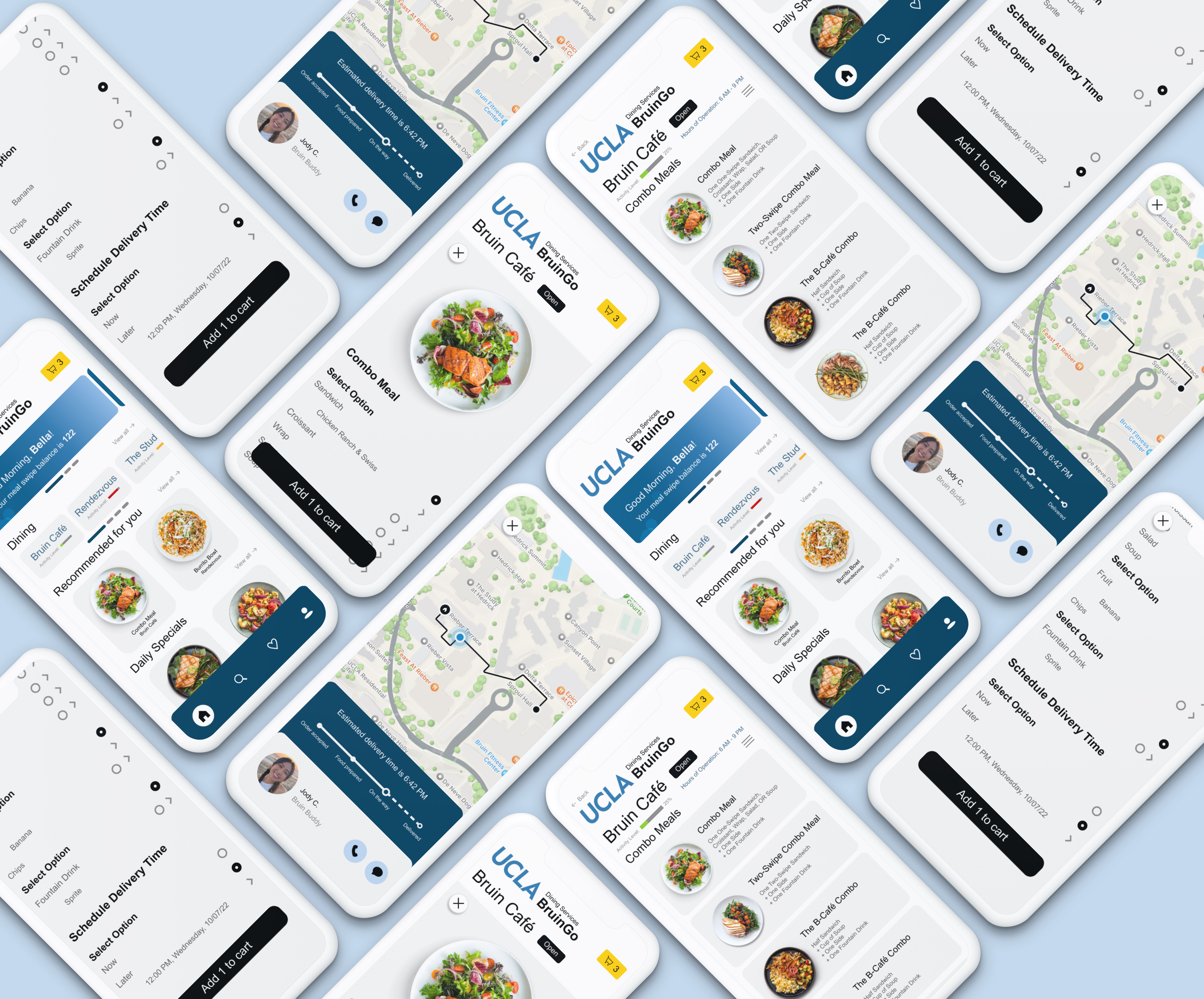
The intention of this app was for it to be UCLA affiliated. Thus, it needed to fit the UCLA brand and look like it was cohesive with its other digital products. The UI elements of the app were designed to be compliant with UCLA branding guidelines, including the typeface, color palette, and logo. Additionally, BruinGo meets the WCAG AAA standard for accessibility, adding to the app's usability.
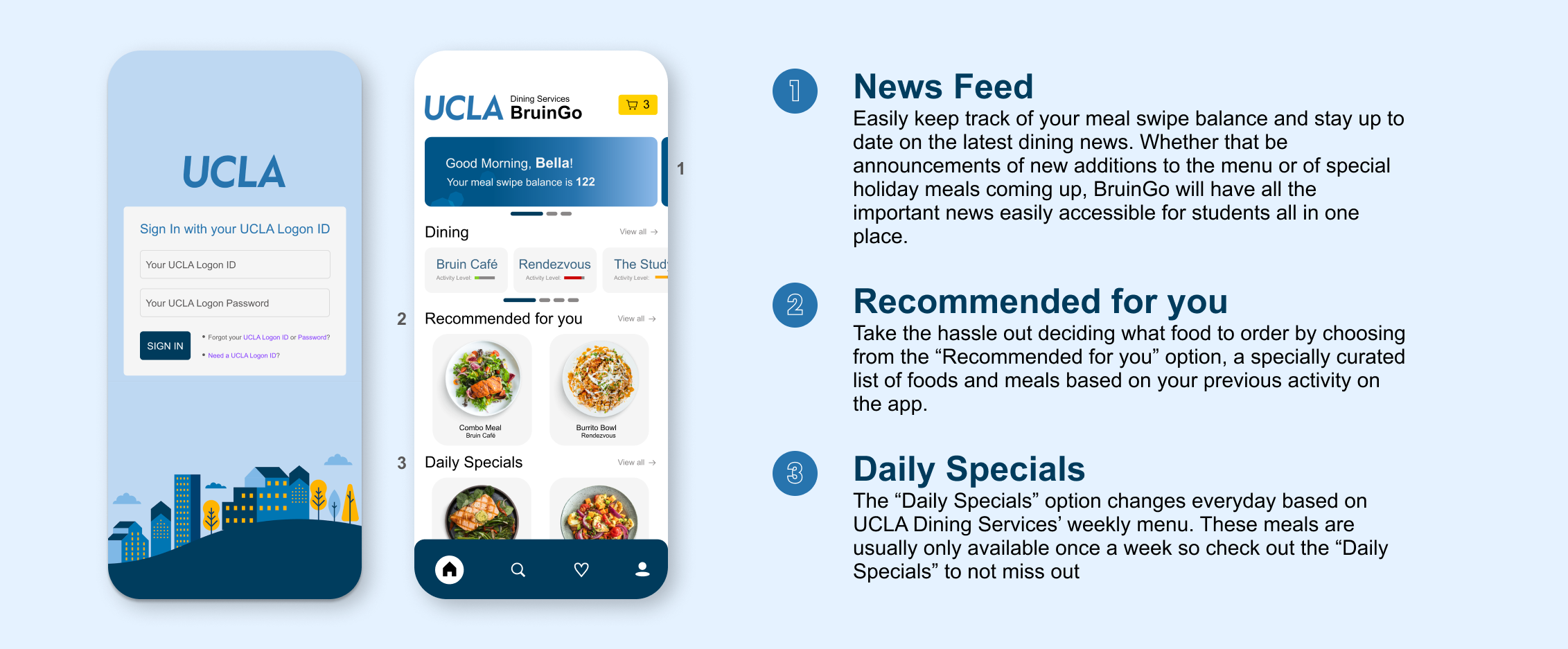
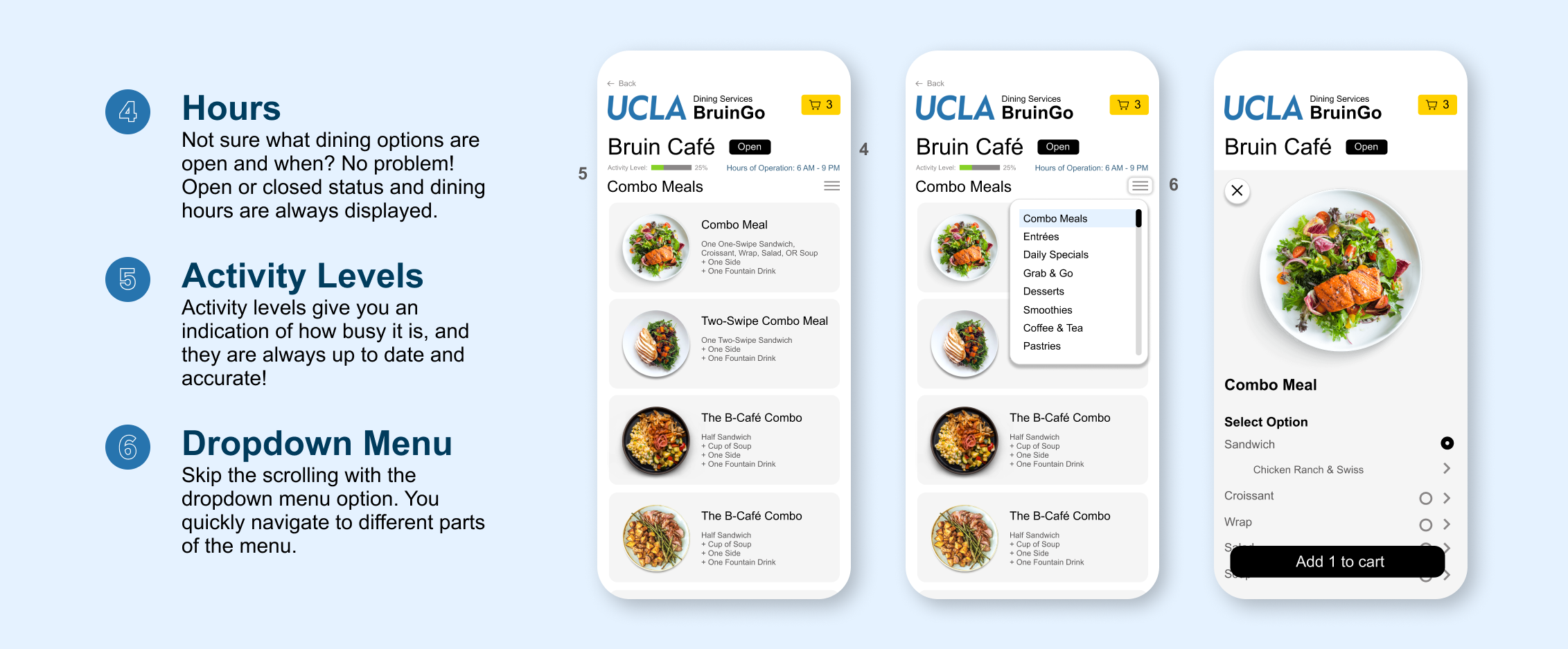
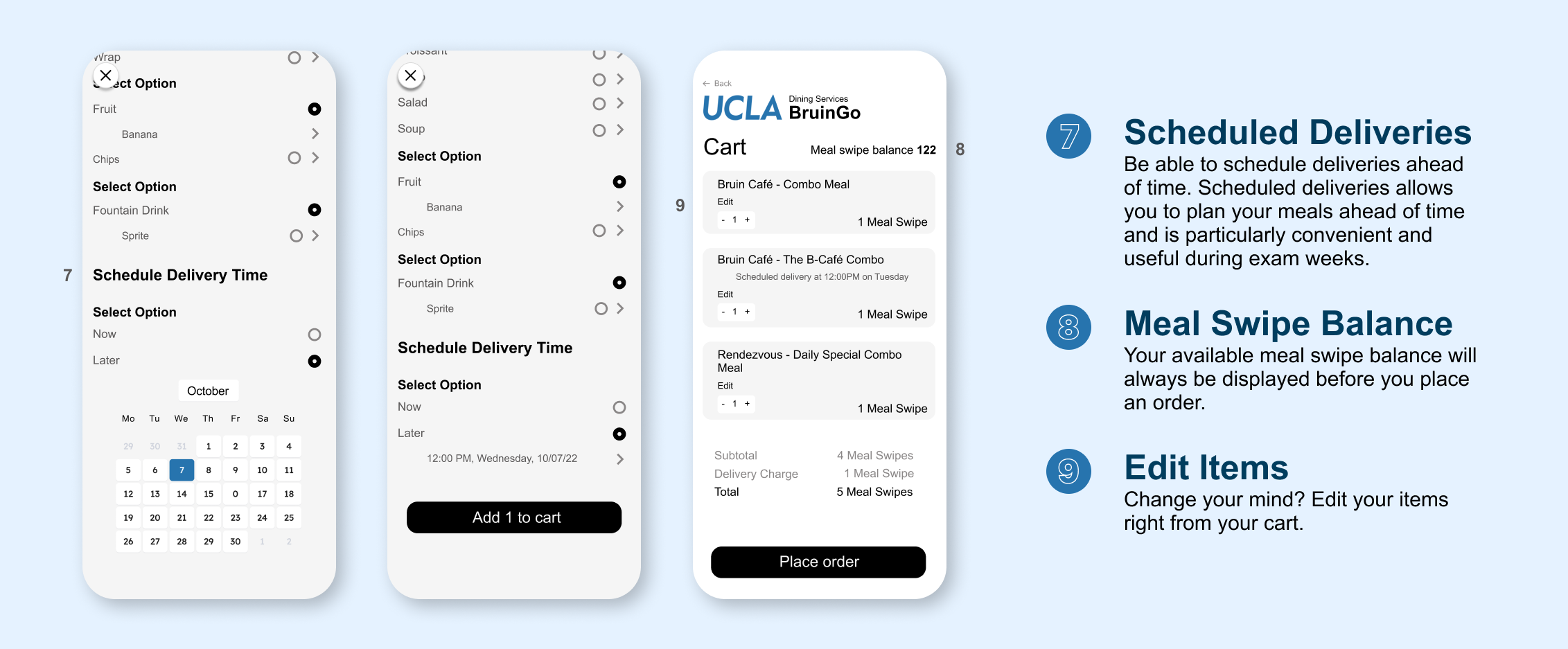
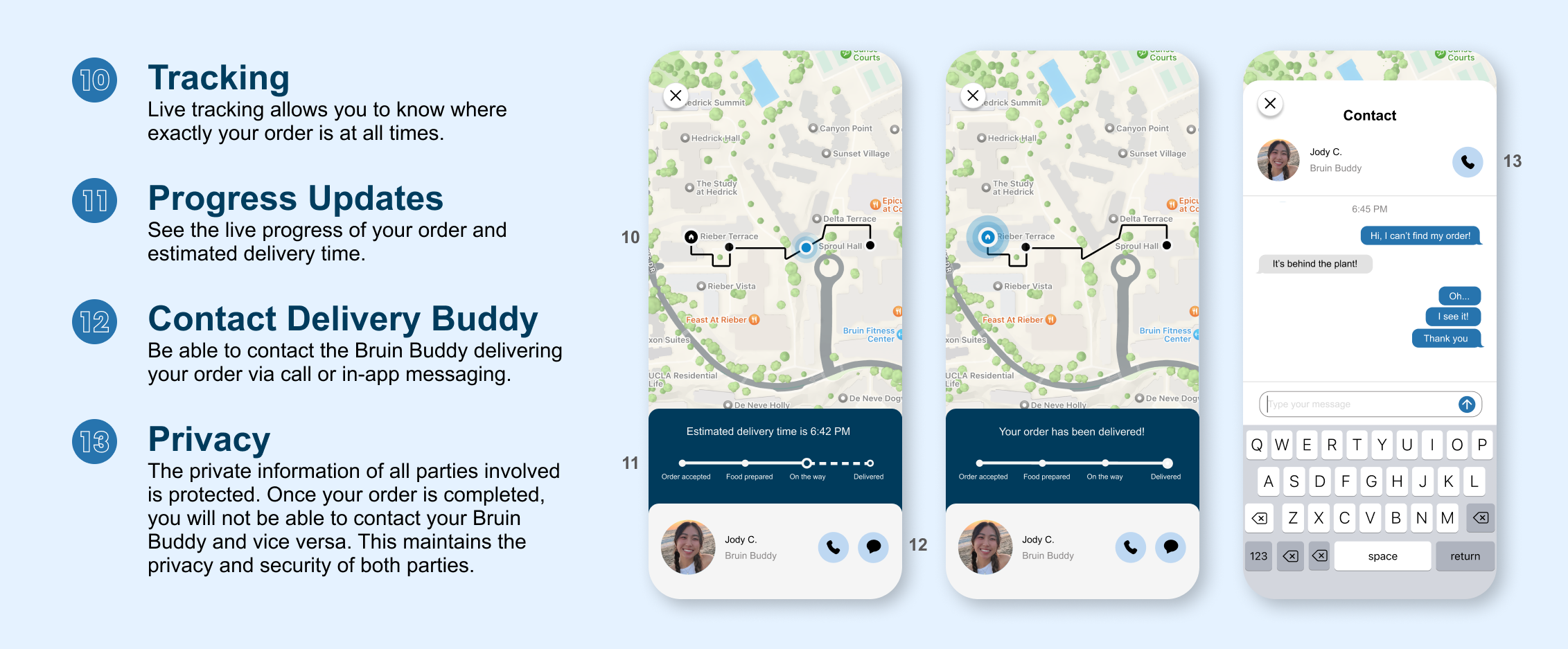
The final product consists of static screens depicting 13 notable features on the app, as well as an interactive prototype to give an idea of the user flow.
I created this project with three goals in mind: 1. accessibility 2. intuitive usability 3. ease and convenience. I wanted BruinGo to have a very inclusive, smooth user experience that would make meal times more convenient for students. Because this was a product design project, I had to really keep in mind the user journey and there were a lot of small details that needed to be accounted for. The next steps for this project would be to transform this design into a responsive design so that the app could be used on multiple digital devices and the interface adapt seamlessly. Overall, I really enjoyed developing this project because of all the creative freedom I had, and I hope to do more product designing in the near future.